


This guide gets your household through a three-day power outage when everything is down: no electricity, no running water, stores closed or empty, and no help coming for days. It is written for rural and Texas homes, where long outages in winter storms and summer heat are real. Follow the clock from the top. Each step lists what to do and what not to do.
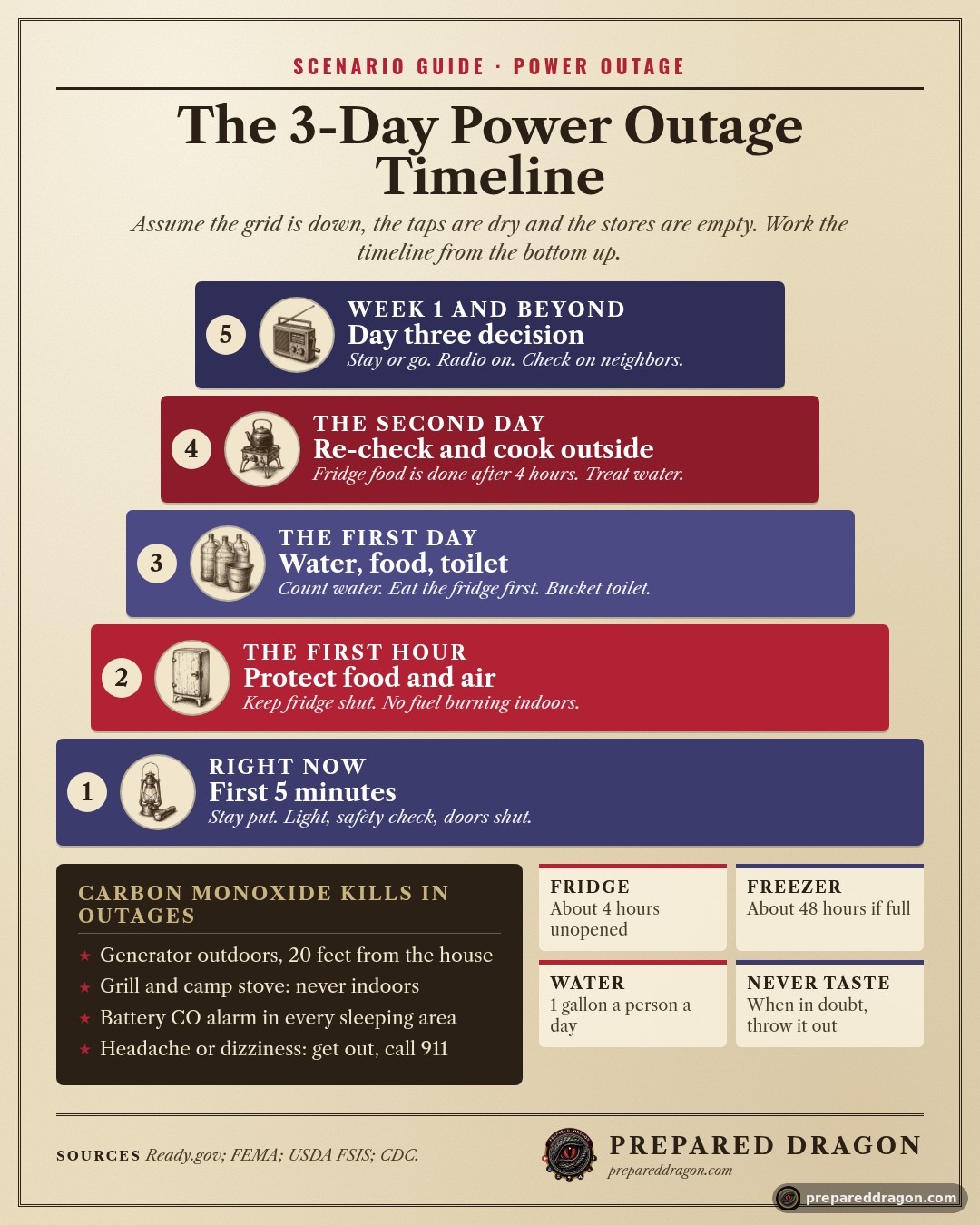
Prepared Dragon Standard Method: Stay Put, Stay Cold, Stay Outside
One room, one cold box, one outdoor fire. Keep everyone in one room, keep the fridge and freezer shut, treat all water you did not store, and burn fuel only outdoors. Where sources disagree, we choose the safest proven method. Some outdoor books suggest heating with a camp stove or charcoal indoors, or give longer fridge times than four hours. CDC says never burn fuel indoors, and USDA says discard perishables after four hours without power. We follow CDC and USDA.
What to Do Right Now
- Stay calm and check for immediate hazards such as gas leaks or broken glass.
- Locate your battery-powered flashlight or lantern and turn it on.
- Close the refrigerator and freezer doors tightly.
- Unplug major appliances and electronics to protect them from surges.
- Leave one light switched on so you will know when power returns.
- Gather everyone in the same room and close doors to unused spaces.
- Turn on a battery-powered or hand-crank radio for updates.
- Check that any battery-backup carbon monoxide alarm is working.
- Put on extra layers of clothing if the temperature is dropping.
The First Hour
Now make the house safe and decide where everyone will stay. Walk through quickly with a flashlight. Look for gas smell, broken glass, water leaks and anything that could start a fire. If you smell gas, leave and call for help when you can.
Pick one room, ideally an interior room with few windows, and make it home base. Bring blankets, water, flashlights and the radio. Close doors to the rest of the house. In winter one warm room is far easier to hold than a whole house. In summer it is a single room you can keep shaded and ventilated.
Keep the refrigerator and freezer shut. Group frozen food together so it holds cold longer. Use battery lights, not candles, to lower fire risk, as Ready.gov advises. Text instead of calling to keep phone lines open. Tune the battery or hand-crank radio, and a NOAA Weather Radio if you have one, for official updates.
- Walk the house for gas smell, leaks, glass and structural damage.
- Set up one home-base room and close the rest off.
- Switch to battery lights and put candles away.
- Confirm the fridge and freezer are shut and the freezer is grouped.
- Test the carbon monoxide alarm and put fresh batteries in if needed.
- Find and count your stored water and food.
- Check on neighbors, especially anyone on power-dependent medical equipment.
The First Day
Water
Count the water you have stored. Ready.gov advises at least one gallon per person per day for drinking and sanitation. Protect stored water from contamination and keep it in a cool, dark place. Drink what you need. Do not ration drinking water. Stop wasting water on nonessential tasks such as washing dishes or clothes.
Food
Open the refrigerator first and eat the most perishable items while they remain safe. USDA FSIS states a closed refrigerator stays cold about four hours. Move next to the freezer, which holds temperature about 48 hours when full or 24 hours when half full if the door stays closed. Group frozen items together to help them stay cold longer. Check temperatures with an appliance thermometer. Discard refrigerated perishables after four hours without power. Discard any perishable food that has been above 40 F for two hours or more. When in doubt, throw it out. Move to shelf-stable foods only after the cold storage is used.
Toilet and hygiene
Set up an emergency toilet with a bucket that has a tight-fitting lid lined with a heavy garbage bag. Tie off full bags and store them away from living space. When soap and water are unavailable, use hand sanitizer that contains at least 60 percent alcohol after first wiping hands clean if they are visibly dirty.
Heat or cold
In Texas winter cold, wear layers and close off unused rooms to hold heat. Stay together in one room. In summer heat, stay on the lowest floor, wear lightweight loose clothing, and drink fluids regularly. Use wet cloths on the skin to cool down. Heat stroke is an emergency.
Warning: Never run a generator, grill, lantern, or camp stove inside a home, tent, basement, or garage. Keep a generator outdoors more than 20 feet from any window, door, or vent with exhaust pointing away. Use a battery-operated or battery-backup carbon monoxide alarm.
Night one
Use battery flashlights or lanterns instead of candles and keep one light on so you know when power returns. Keep the radio low. Sleep in your home-base room, in layers. If anyone gets a headache, dizziness or nausea while a fuel-burning device is running anywhere nearby, get everyone outside and call 911.
- Count and protect stored water.
- Eat perishable food from the refrigerator first.
- Check freezer temperature and group items.
- Set up the emergency toilet bucket.
- Confirm hand sanitizer is available.
- Adjust clothing and room use for the season.
- Place the carbon monoxide alarm and keep generator outside.
- Turn off unneeded appliances and leave one light on.
The Second Day
Food: Decide and Cook
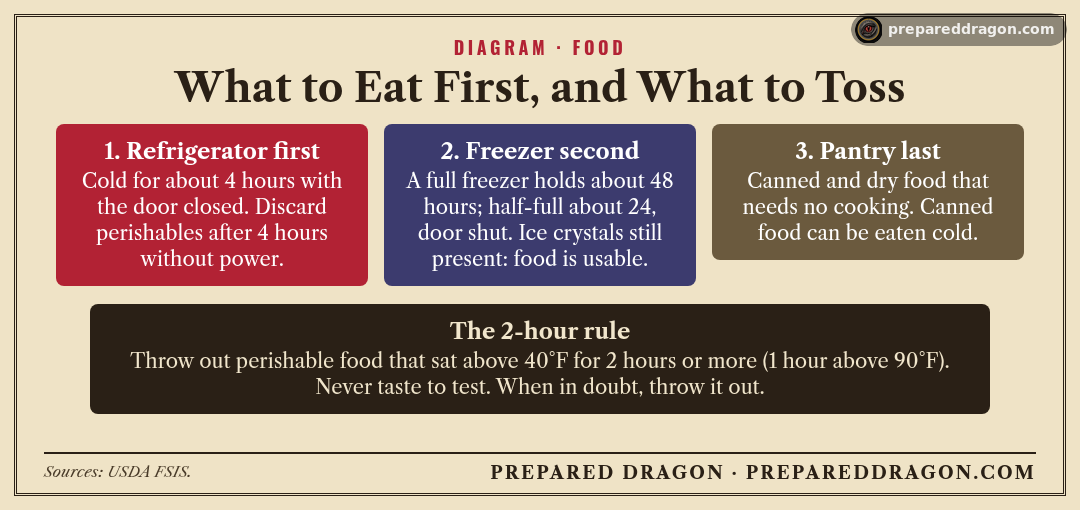
By now the refrigerator is past its safe window. Throw out perishable food that sat above 40°F for two hours or more (one hour if it was above 90°F). Never taste food to decide. The freezer is your next stop: if packages still hold ice crystals, or are as cold as a refrigerator, the food is still good to cook. Cook the most perishable items first, outdoors, and plan simple meals from shelf-stable food: rice, beans, canned goods, peanut butter. See our pantry basics.
Safe Cooking
Cook outdoors only. Use a camp stove or grill in a well-ventilated area away from the house. Never bring any cooking device inside, even partially. Keep generators more than twenty feet from windows, doors, or vents with exhaust pointing away.
Water and Sanitation
Continue using stored water for drinking and basic needs. For treatment details, see the guide No Water: The First 72 Hours. Use a bucket with a tight lid lined by a heavy garbage bag as an emergency toilet. Tie bags off and store them away from living areas.
Staying Informed and Saving Resources
Listen to your battery-powered or hand-crank radio for updates. Text instead of calling to preserve phone lines. Turn off or unplug appliances to avoid surge damage when power returns. Leave one light on so you know when service is restored. Use radios and lights sparingly to extend battery life and conserve fuel for essential needs.
Health and Neighbors
Check medications and any backup plan for electric medical devices. Close off unused rooms to hold heat or stay on the lowest floor if heat is an issue. Wear layers or lightweight clothing as needed. Check on neighbors, especially those who may need help with medical equipment or mobility.
Morale and Kids
Keep routines simple. Play quiet games or read together. Share tasks so everyone feels useful. Short periods of family time without devices can help reduce stress during the outage.
- Re-check refrigerator and freezer temperatures and discard unsafe food.
- Cook only outdoors with proper ventilation.
- Listen to the radio for news and conserve batteries.
- Check medications and medical-device backups.
- Visit nearby neighbors if safe to do so.
- Keep children occupied with simple activities.
- Save fuel and power for priority uses only.
- Stay hydrated and rest when possible.
Week 1 (and Beyond)
Day Three: The Decision Point
By the third day, decide whether staying is still the right call. Count the water and food left, and ask whether your shelter is still safe and tolerable. Think about medical needs that depend on power, road conditions and the weather. If staying is harder than leaving and you have a safe place to go, plan a calm move while there is daylight. Take your 72-hour kit, water, medications and documents. Our 72-hour kit checklist covers what to carry.
Days Four to Seven: Settle Into a Routine
A long outage is easier with a schedule. Set check times each day and keep to them. Morning: count water and fuel and decide the day’s meals. Midday: cook one hot meal outdoors and drink plenty. Evening: listen to the radio at one set time to save batteries, then settle in before dark. Give every person a job, children included. Check on neighbors every day. Keep hand hygiene strict with soap and treated water, or sanitizer with at least 60 percent alcohol, because illness is harder to handle with no clinic nearby.
- Set daily times for water count, meal, radio and neighbor check.
- Rotate through the freezer food first, then pantry food.
- Keep the emergency toilet bagged, tied and stored away from living space.
- Keep a short written log of water, fuel, battery use and medications.
- Rest. Fatigue leads to mistakes with fire and fuel.
Past One Week
If the outage goes beyond a week, water becomes the main problem. Follow the Standard Method in No Water: The First 72 Hours. Count cooking fuel, watch for signs of illness, and keep contact with neighbors and local officials by radio. Consider moving to a shelter or a relative’s home if supplies run low or someone gets sick. A fire is possible from several sources, so see How to Start a Fire: Every Method, Easiest to Hardest and keep a few reliable igniters on hand.
When Power Returns
Leave major appliances and electronics off or unplugged. Turn on one light to confirm the power is steady, then bring items back one at a time to avoid surges. Open the fridge and freezer once power is steady, then check temperatures and food. If an appliance thermometer reads 40°F or below, the food is safe. Throw out anything held above safe limits.
Prep Ahead Checklist
- Store at least one gallon of water per person per day for drinking and sanitation.
- Keep battery-powered flashlights and lanterns ready with extra batteries (a 72-hour kit covers many of these).
- Have a battery-powered or hand-crank radio plus a NOAA Weather Radio.
- Install a battery-operated or battery-backup carbon monoxide alarm.
- Prepare a bucket with tight lid and heavy bags for an emergency toilet.
- Keep a manual can opener with your stored food.
- Set aside some cash in small bills.
- Keep the car fuel tank at least half full at all times.
- Make a backup plan for any electric medical devices.
- Store a camp stove or grill for outdoor use only.
- Freeze containers of water ahead to help keep the freezer cold longer.
- Place an appliance thermometer in the refrigerator and freezer.
Frequently Asked Questions
Can I use a generator?
Never run a generator inside a home, garage, or any enclosed space. Place it outdoors more than twenty feet from windows, doors, or vents with the exhaust pointed away. Use a long extension cord and a battery-operated carbon monoxide alarm.
How long does food last?
A closed refrigerator keeps food cold about four hours. A full freezer stays cold about forty-eight hours. Discard refrigerated perishables after four hours without power. Throw out any perishable food that has been above forty degrees for two hours or more. When in doubt, throw it out.
Can I run a grill indoors?
Never run a grill, camp stove, or charcoal burner inside a home, tent, or garage even with doors or windows open. These appliances produce carbon monoxide that can build up quickly indoors.
Should I ration water?
Plan on one gallon of water per person per day for drinking and sanitation. Use what you need for drinking first. Rotate stored water regularly so it stays fresh.
Texas notes: Rural homes on private wells lose water when the well pump loses power, so the water count in your first hour matters even more. Winter storms and summer heat both cause long outages here. Read what the February 2021 freeze taught us and the power outage and solar storm plan for more.
Prep Ahead: Gear for This Guide
Everything here is for before the outage. Buy it now, not during one.

Power Outage Kit
When the lights go out, theirs stay on. Light in every room, weather alerts with no outlet, phones that stay charged, and warm hands until the grid comes back. 6…
See price at Amazon
Power Outage Lantern and Weather Radio
Light, weather alerts and a phone top-up in one unit for when the power goes out. Charges by solar panel or hand crank.
See price at Amazon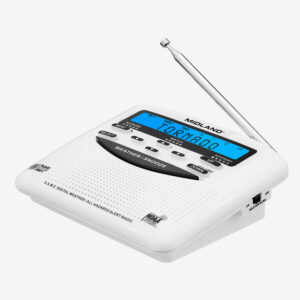
Midland WR120 NOAA Weather and Emergency Alert Radio
A desktop NOAA weather and all-hazard alert radio with SAME county programming and battery backup.
See price at Amazon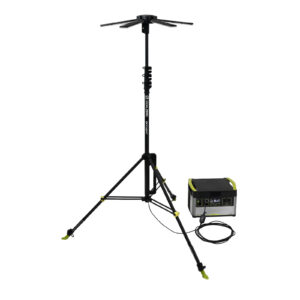
Goal Zero Skylight Lantern
A Goal Zero Skylight area lantern, sold at BioLite, for indoor or camp lighting when the power is out.
See price at Amazon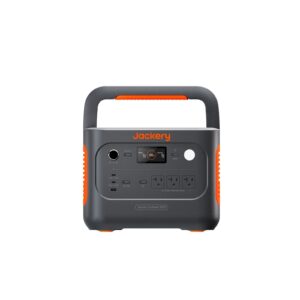
Jackery Explorer 1000 v2 Portable Power Station, 1070Wh
A 1070Wh portable power station for running phones, lights, radios and a fridge during outages. A compatible solar panel is sold separately.
See price at Amazon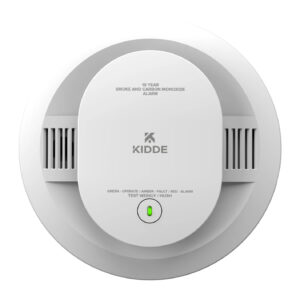
Kidde DETECT Combo Smoke and Carbon Monoxide Alarm, 10-Year Battery
A 10-year battery smoke and carbon monoxide alarm with voice alerts, from Kidde's official store.
See price at Amazon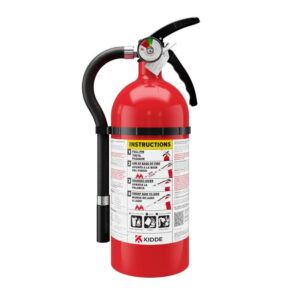
Kidde Home Fire Extinguisher, 2-A:10-B:C
A 2-A:10-B:C multipurpose home fire extinguisher from Kidde's official store.
See price at Amazon
UCO Stormproof Matches
UCO Stormproof matches that are waterproof and windproof, for a kit or pack.
See price at Amazon- Power Outage Kit: a ready kit for the first days
- Taylor Large Dial Refrigerator and Freezer Thermometer (5924): an appliance thermometer, so you can judge food safety after the power returns
- Power Outage Lantern and Weather Radio: a lantern and NOAA weather radio bundle
- Kidde DETECT Combo Smoke and Carbon Monoxide Alarm, 10-Year Battery: a battery-backup carbon monoxide alarm
- Midland WR120 NOAA Weather and Emergency Alert Radio: official alerts without internet
- Goal Zero Skylight Lantern: safe battery light, no candles
- Jackery Explorer 1000 v2 Portable Power Station: phone charging and small loads, with no fumes
- UCO Stormproof Matches: reliable outdoor ignition
- Kidde Home Fire Extinguisher: keep one in the kitchen
More: Survival Guides & Books in the Prepared Dragon shop. Some links on this page are affiliate links.
Sources
- US Army, FM 21-76 Survival (public domain), shelter and firecraft chapters; and ATP 3-50.21.
- Ready.gov / FEMA, Power Outages
- CDC, What to Do to Protect Yourself During a Power Outage
- CDC, Carbon Monoxide Poisoning Basics
- USDA FSIS / FoodSafety.gov, Food Safety During Power Outage
- Ready.gov / FEMA, Water