


Quick take
- A household power-outage plan should cover ordinary blackouts and the rarer risk of a severe solar storm damaging the grid.
- The guide walks through lights, heat, food, communications and backups.
- It is a preparedness plan, not a prediction that a solar storm is imminent.
Most power outages come from storms, heat and equipment failure. A few come from the sun. NOAA’s Space Weather Prediction Center documents geomagnetic storms that damaged power grids, including Quebec in March 1989 and Sweden in October 2003. The good news is that one plan covers both.
Know the threat
NOAA rates geomagnetic storms from G1 (minor) to G5 (extreme), the way hurricanes are rated by category.
| Level | Possible effects on power systems | Average frequency (11-year cycle) |
|---|---|---|
| G3 Strong | Voltage corrections may be required, and some protection devices may give false alarms | About 200 per cycle |
| G4 Severe | Possible widespread voltage control problems, and some protective systems may trip key grid assets | About 100 per cycle |
| G5 Extreme | Some grid systems may experience complete collapse or blackouts. Transformers may be damaged. | About 4 per cycle |
Confirmed A G5 storm averages about four days per 11-year solar cycle, by NOAA’s count. The risk is real, but rare.
Before the lights go out
- Inventory everything in your home that needs electricity, especially medical devices
- A flashlight for every household member, with spare batteries
- A battery bank or portable charger for phones
- Battery-backed carbon monoxide detectors on every level of the home
- A plan for refrigerated medicines (ask your pharmacist how long they keep)
- Nonperishable food and stored water (see our water guide)
- A thermometer for the fridge and freezer
- Cash, since ATMs and card readers may be down
- A battery or hand-crank radio
Plan how your family will reach each other when phones are down, too: see Staying in Touch When the Power or Internet Goes Down.
During an outage
- Keep the fridge and freezer closed. A fridge keeps food cold about 4 hours, and a full freezer holds about 48 hours.
- Run a generator outdoors only, at least 20 feet from windows, doors and attached garages.
- Never heat your home with a gas stove or oven.
- Unplug appliances and electronics so a surge does not damage them when power returns.
- If heat or cold is extreme, go to a community location that has power.
After
- When in doubt, throw it out. Discard food that has been at 40°F or higher for two hours or more.
- If the power was out for more than a day, discard refrigerated medicines unless the label says otherwise, and call your pharmacist.
Bottom line: You do not need to fear the sun to respect it. Prepare for a three-day outage first, and you have covered most of what a severe solar storm would throw at your home.
Related: The 12,000-year catastrophe cycle vs. the science and the Preparedness Checklists.
Sources
- Ready.gov, Power Outages
- NOAA Space Weather Prediction Center, NOAA Space Weather Scales
- NOAA Space Weather Prediction Center, Electric Power Transmission
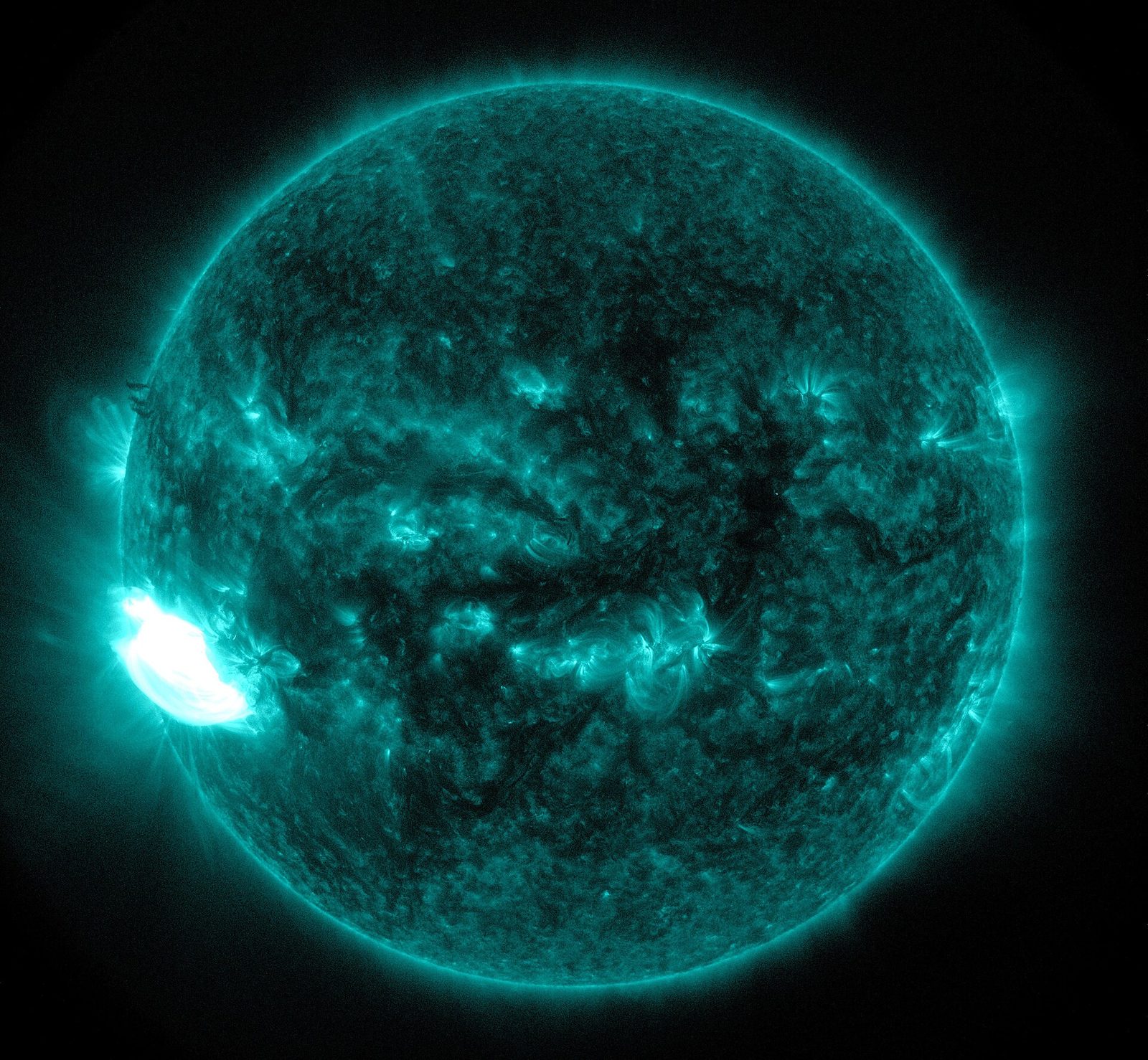
Featured image: NASA’s SDO Observes an X-class Solar Flare (15562323166), by NASA Goddard Space Flight Center from Greenbelt, MD, USA. Public domain, via Wikimedia Commons. See all image credits.
Related guides
- “Black Sky”: What a Nationwide Blackout Would Look Like, and the Lessons From Spain and Britain
- Winter Storm Readiness: Home, Car, and the Warnings That Matter
- What to Buy Before a Winter Storm: A Checklist Mapped to Real Needs
- What to Have on Hand When Banks or Card Payments Go Down
- Water Storage Basics: How Much, How to Store It, How to Make It Safe