


Quick take
In May 2011 the CDC published “Preparedness 101: Zombie Apocalypse,” a tongue-in-cheek blog post that used the undead to teach ordinary emergency planning. The joke worked because the advice underneath was real: water, food, medicine, documents, a family plan and an exit route. That is the all-hazards idea. You don’t need to guess whether the next disruption is a winter storm, a hurricane, a flood or a multi-day grid failure. Build one plan sturdy enough for the silliest scenario and it covers the real ones too.
Candid Dragon rating: CDC zombie campaign existed, May 16, 2011, by Ali S. Khan: Confirmed / Factual. All-hazards approach as standard emergency-management practice: Factual (CDC post states the same kit and plan apply to floods, earthquakes and hurricanes).
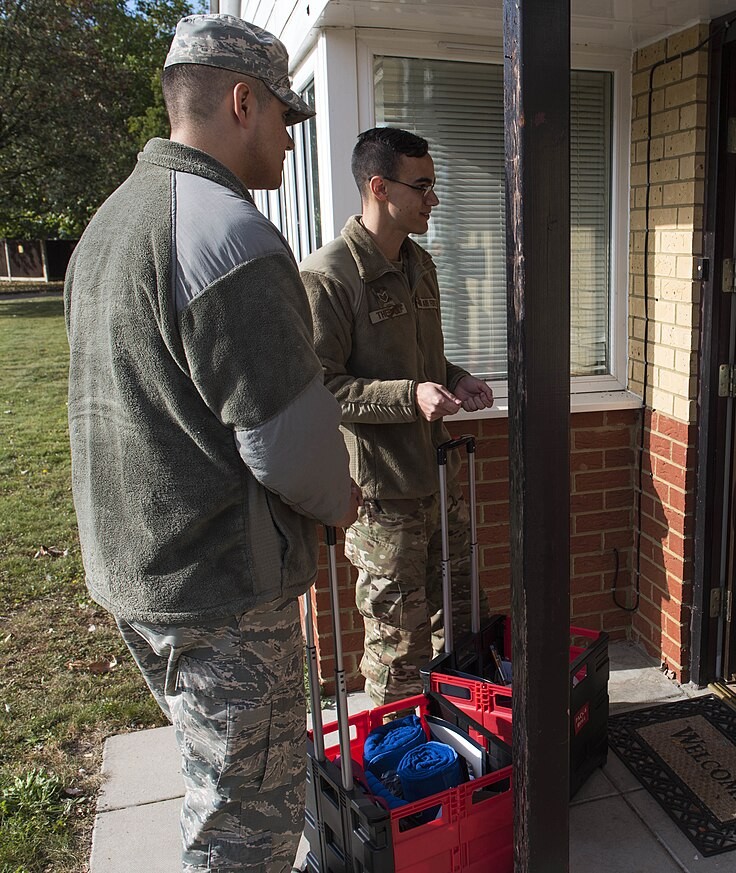
Featured image: Emergency kits being delivered door to door during National Preparedness Month, September 2019. Photo: Airman 1st Class Jennifer Zima / U.S. Air Force (public domain). Use of this image does not imply endorsement by the U.S. Air Force or Department of Defense.
Yes, the CDC really did this
On May 16, 2011, the CDC’s Office of Public Health Preparedness and Response posted “Preparedness 101: Zombie Apocalypse” on its Public Health Matters blog, by Ali S. Khan (CDC, archived copy, Factual; CDC Stacks record, Factual). The post opens: “There are all kinds of emergencies out there that we can prepare for. Take a zombie apocalypse for example.”
The tone was playful. The kit list was not. It named water (1 gallon per person per day), non-perishable food you eat regularly, prescription and non-prescription medications, tools such as a utility knife, duct tape and a battery-powered radio, sanitation supplies, clothing and bedding, copies of important documents, and first aid supplies. It then told readers to identify the emergencies likely where they live, pick two meeting places, list emergency contacts including an out-of-state contact, and plan multiple evacuation routes. In the post’s words, “You can also implement this plan if there is a flood, earthquake, or other emergency.”
The original blogs.cdc.gov address now returns a 404; the archived and CDC Stacks copies preserve the text.
Why a zombie, and not a real disaster?
Pick one realistic disaster and people plan for that one alone, or argue about whether it will happen. A fictional threat sidesteps that. It has no politics, no “that never happens here,” and it stresses every system at once: utilities, supply chains, travel, communication and medical care. A plan that holds up to that covers the real list: winter storms and grid strain, hurricanes, floods, wildfire evacuations and supply disruptions.
The all-hazards checklist
1. Water
Store at least 1 gallon per person per day (CDC, above), plus pets. Rotate stored water and keep a backup way to treat it. Full guide: Emergency water storage basics.
2. Food
Non-perishable food your household already eats, a manual can opener, and a plan to use refrigerator food first in an outage. Rotate stock into everyday meals so nothing expires on the shelf.
3. Power and light
Flashlights and lanterns over candles, spare batteries, a battery or hand-crank radio, and a way to charge phones. Never run a generator, grill or camp stove indoors or in a garage. Full guide: Power outage and solar storm preparedness.
4. Heat
Blankets, layers and sleeping bags; pick one room to keep warm; know which heaters are rated for indoor use, and keep a working carbon monoxide alarm. Winter list: What to buy before a winter storm and Winter storm readiness for home and car.
5. Medical and medications
A supply of prescriptions where your pharmacist and insurer allow, written medication lists, glasses, hearing-aid batteries, and a stocked first aid kit. Plan for anyone who depends on powered medical equipment.
6. Documents
Copies of IDs, insurance policies, deeds or leases, medical records and key phone numbers, in a waterproof pouch and a secure digital copy. Some cash in small bills.
7. Communication and family plan
Two meeting places (one near home, one outside the neighborhood), an out-of-state contact, written phone numbers in case a phone dies, and a check-in routine. Sign up for local emergency alerts.
8. Evacuate or shelter in place
Know your local evacuation routes, with more than one way out. For sheltering in place, know which room you would use and what you need inside it for several days.
9. Go-bags
One per person: water, snacks, meds, documents copy, flashlight, radio, phone charger, clothing, hygiene items, whistle, first aid. Checklist: 72-hour emergency kit checklist.
10. Car kit
Blankets, water, snacks, flashlight, jumper cables, first aid kit, phone charger, and in winter an ice scraper and traction aid. Keep the tank from running low when weather is forecast.
11. Neighbors and community
Know who on your street is elderly, disabled or alone. Trade phone numbers. Pooling a generator, a chainsaw or a spare room goes further than any single stockpile.
12. Skills
Shut off your home’s water, gas and electricity; basic first aid and CPR; reading a weather alert; cooking without power safely. Skills weigh nothing and never expire.
Building the kit
Most of this list is already in your house. For the gaps, the Candid Dragon Supply Depot carries a Power Outage Bundle, a First Aid Add-on and a Multi-Tool and Fire-Starting Kit. Buy what fills a real gap in your plan, not what fills a shelf.
Our view (opinion)
The all-hazards approach works because it trades prediction for capability. Nobody can say which disruption comes next, but almost all of them break the same few things: power, water, supply runs, travel and communication. Planning for a scenario too absurd to argue about gets people past the “it won’t happen here” stall and straight to the useful questions. The CDC’s zombie post proved a light touch can carry serious advice. The humor gets you to the checklist; the checklist is what gets you through the week.
Sources
- Khan, Ali S., “Preparedness 101: Zombie Apocalypse,” CDC Public Health Matters blog, May 16, 2011, archived: https://web.archive.org/web/20110519201602/http:/emergency.cdc.gov/socialmedia/zombies_blog.asp (Factual)
- CDC Stacks archived copy: https://stacks.cdc.gov/view/cdc/250975/cdc_250975_DS1.pdf (Factual)
- Featured image: Airman 1st Class Jennifer Zima / U.S. Air Force, public domain, https://commons.wikimedia.org/wiki/File:RAF_Alconbury_Emergency_Preparedness_Month_(5768282).jpg
- Candid Dragon guides (internal, HTTP 200 Nov 23, 2026): emergency-water-storage-basics, power-outage-and-solar-storm-preparedness, what-to-buy-before-a-winter-storm, 72-hour-emergency-kit-checklist
Be informed. Be aware. Be prepared.