


Quick take
- A dual-fuel generator runs on gasoline or propane. Propane stores without going stale, and you can switch fuels when one is hard to find after a storm.
- Expect a little less power on propane. Every maker below rates its generator lower on propane than on gasoline.
- Run it outdoors only, at least 20 feet from the house (CDC), and connect it to your home only through a transfer switch installed by a licensed electrician.
Prepared Dragon may earn a commission when you buy through links on this page, at no extra cost to you. As an Amazon Associate, Prepared Dragon earns from qualifying purchases. Current prices are always on the retailer’s page. Affiliate disclosure.
Featured: Westinghouse WGen9500DF
Westinghouse rates the WGen9500DF at 9,500 running watts on gasoline and 8,500 on propane. It has remote electric start plus 30A and 50A outlets for a transfer switch, so it can cover home backup or a big camp setup. It does not include a carbon monoxide sensor, so placement matters even more. It is not for sale in California.
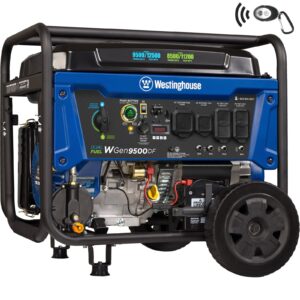
Westinghouse WGen9500DF 12,500-Watt Dual Fuel Portable Generator
This dual-fuel portable is rated 9,500 running watts on gasoline and 8,500 on propane, with remote electric start and 30A and 50A outlets for a transfer switch. It can cover…
See price at AmazonHow the home-backup dual-fuel generators compare
All figures are the makers’ own ratings.
| Model | Running watts, gas / propane | Start | Outlets for a transfer switch | CO shutoff |
|---|---|---|---|---|
| Westinghouse WGen9500DF | 9,500 / 8,500 | Remote electric | 30A and 50A | No |
| DuroMax XP13000EH | 10,500 / 10,000 | Electric | 50A | Yes |
| Champion 201302 | 9,200 / 8,280 | Electric | 30A and 50A | Yes (CO Shield) |
| Pulsar G12KBN | 9,500 / 8,550 | Electric | 30A and 50A | No |
| DuroMax XP11000iH (inverter) | 9,000 / 8,550 | Remote and electric | 50A | Yes |
Pulsar lists the G12KBN as CARB and EPA certified. The Westinghouse, both DuroMax models and the Champion are listed as not for sale in California.
DuroMax XP13000EH 13,000-Watt Dual Fuel Portable Generator
DuroMax rates this dual-fuel unit at 10,500 running watts on gasoline and 10,000 on propane, with electric start, a transfer-switch-ready 50A outlet, and a built-in CO shutoff. It is built…
See price at Amazon
Champion 201302 11,500-Watt Dual Fuel Portable Generator
Champion rates this dual-fuel generator at 9,200 running watts on gasoline and 8,280 on propane, with electric start, 30A and 50A outlets, and CO Shield auto shutoff. It is suited…
See price at Amazon
Pulsar G12KBN 12,000-Watt Dual Fuel Portable Generator
Pulsar rates this dual-fuel generator at 9,500 running watts on gasoline and 8,550 on propane, with electric start and 30A and 50A outlets; the maker lists it as CARB and…
See price at Amazon
DuroMax XP11000iH 11,000-Watt Dual Fuel Inverter Generator
DuroMax rates this dual-fuel inverter at 9,000 running watts on gasoline and 8,550 on propane, with remote and electric start, a transfer-switch-ready 50A outlet, and a built-in CO shutoff. It…
See price at AmazonHow to pick
- Running watts. Add up the running watts on the labels of what you’ll run at once, then leave room for the biggest motor’s start-up surge.
- Outlet to match your transfer switch. A 50A outlet can feed a larger transfer switch and 240V loads; a 30A outlet suits a smaller one. Have the electrician confirm.
- CO shutoff. Models with CO shutoff turn off if carbon monoxide builds up around them. It’s a backup, not a substitute for placing the generator well away from the house.
- Fuel plan. Gasoline goes stale in storage; use a fuel stabilizer as the maker directs. Propane tanks store outside and don’t go stale.
Standby generator vs portable generator
A portable generator is something you roll out, fuel and start when the power drops. A standby generator is installed, usually with an automatic transfer switch, and can start on its own. We sell the equipment link; we do not install it. A licensed electrician or dealer has to handle permits, the fuel line (propane or natural gas, as the maker lists) and the transfer switch.
- When portable is the right first step. Budget, a rental, short outages, or no window to install a permanent unit. The dual-fuel portables above cover home backup if you can place them outdoors and connect them correctly. For quiet camp power or a few essentials, the Honda EU2200i is a gasoline inverter rated by Honda at 1,800 running watts. It is a small portable, not a house plant.
- When standby is the better path. Medical devices that cannot wait, long outages, or no one home to start a portable. Standby units run on propane or natural gas per the maker’s listing, not a gasoline jug.
- Placement still matters. Carbon monoxide rules still apply to portables (outdoors, well away from doors). Standby units have their own clearance rules from the maker.
Confirm the current title and specifications on each product page before you buy. This guide does not list prices.
Honda EU2200i Inverter Generator
Honda rates the EU2200i at 1,800 running and 2,200 starting watts on gasoline, and 48 dBA at one-quarter load and 57 dBA at rated load, in a 47.4 lb package…
See price at Amazon
Generac Guardian 22 kW Standby Generator (7043)
The Generac Guardian 22 kW unit is rated 22,000 watts on propane and 19,500 watts on natural gas and, in this configuration, includes a 200-amp whole-house transfer switch. It is…
See price at Amazon
Champion 100837 14 kW Home Standby Generator with 200A ATS
Champion rates this 14 kW standby system at 14,000 watts on propane and 12,500 watts on natural gas, and it includes a 200-amp automatic transfer switch. A licensed electrician or…
See price at AmazonKeep a CO alarm inside
The CDC says never to run a generator inside a home, garage, basement or crawl space, even with doors open. Keep a working carbon monoxide alarm in the house.
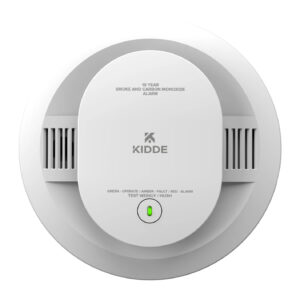
Kidde DETECT Combo Smoke and Carbon Monoxide Alarm, 10-Year Battery
A 10-year battery smoke and carbon monoxide alarm with voice alerts, from Kidde's official store.
See price at AmazonSources: CDC, carbon monoxide poisoning; makers’ published ratings on each product page. Prefer quiet indoor power? See the power station guide.
Common questions
What is the best dual fuel generator for home backup?
In the 9,000 to 10,500 running-watt class, the Westinghouse WGen9500DF (9,500 running watts on gas, 8,500 on propane, remote electric start, 30A and 50A outlets), DuroMax XP13000EH (10,500 / 10,000, CO shutoff), Champion 201302 (9,200 / 8,280, CO Shield) and Pulsar G12KBN (9,500 / 8,550) are the common choices. All figures are the makers' ratings. Pick by running watts, the outlet your transfer switch needs, and whether you want automatic CO shutoff.
Why choose dual fuel?
You can run on gasoline or propane. Propane in a tank does not go stale the way stored gasoline does, and you can switch fuels when one is hard to find after a storm. Expect a little less output on propane: each maker rates its generator lower on propane than on gasoline.
How far from the house should a generator be?
The CDC says to run a generator outdoors only and at least 20 feet from your home, with the exhaust pointed away from doors, windows and vents. Never run one in a garage, even with the door open, and keep a working carbon monoxide alarm inside.
How do I connect a generator to my house?
Use a transfer switch or interlock kit installed by a licensed electrician, and run the generator's 30A or 50A outlet to it with the matching cord. Backfeeding through a dryer outlet is dangerous to you and to utility line workers.
Does the Westinghouse WGen9500DF have CO shutoff?
Our listing notes this model does not include a carbon monoxide sensor, so it must run outdoors only, far from doors and windows. The DuroMax XP13000EH and Champion 201302 include CO shutoff features, according to their makers.